
MILE MARKER 03EPISODE 3
By Jansen Bagwell · The Dirt Road · Mile Marker 03
Can the Eucharist actually help us get set free? And what does set free even mean?
Paul gives us a place to start. In Galatians 5:1 he says, “For freedom Christ has set us free; stand fast therefore, and do not submit again to a yoke of slavery.”
A yoke is heavy. It is the wooden beam laid across an animal’s shoulders so it can be driven where someone else wants it to go. That is the picture Paul is painting. Something heavy, weighing us down, steering us where we were never meant to go.
A Real Enemy
Here is the part we do not like to say out loud. We get enslaved because there is a real enemy. Invisible, but real. Behind every sin is the whisper of a demon, a suggestion that feels like our own thought. Paul calls them fiery darts.
Many Catholics are not sure the devil is real. And yet you can turn on almost any screen and see evil plastered all over it.
Paul did not leave any room for doubt. “For we are not contending against flesh and blood, but against the principalities, against the powers, against the world rulers of this present darkness, against the spiritual hosts of wickedness in the heavenly places” (Ephesians 6:12).
Being set free starts with understanding where that whisper is coming from. And Jesus did not leave us to fight an invisible enemy empty handed. He gave us the sacraments. Every one of them pours out grace, and grace is what we need to win a spiritual battle.
Today I want to look at one of them up close. I want to walk the road to Emmaus with you.
Seven Miles to Emmaus
Luke 24 opens on the third day. That very morning, women went to the tomb and found the stone rolled away. Two men in dazzling clothes asked them, “Why do you seek the living among the dead? He is not here, but has risen.”
Now, that same afternoon, two disciples are walking out of Jerusalem toward a village called Emmaus, about seven miles away. I do not know about you, but seven miles would take me a while. They are talking about everything that has happened. The cross. The burial. The rumors from the tomb.
Then a stranger falls into step beside them. Luke says, “Jesus himself drew near and went with them. But their eyes were kept from recognizing him.”
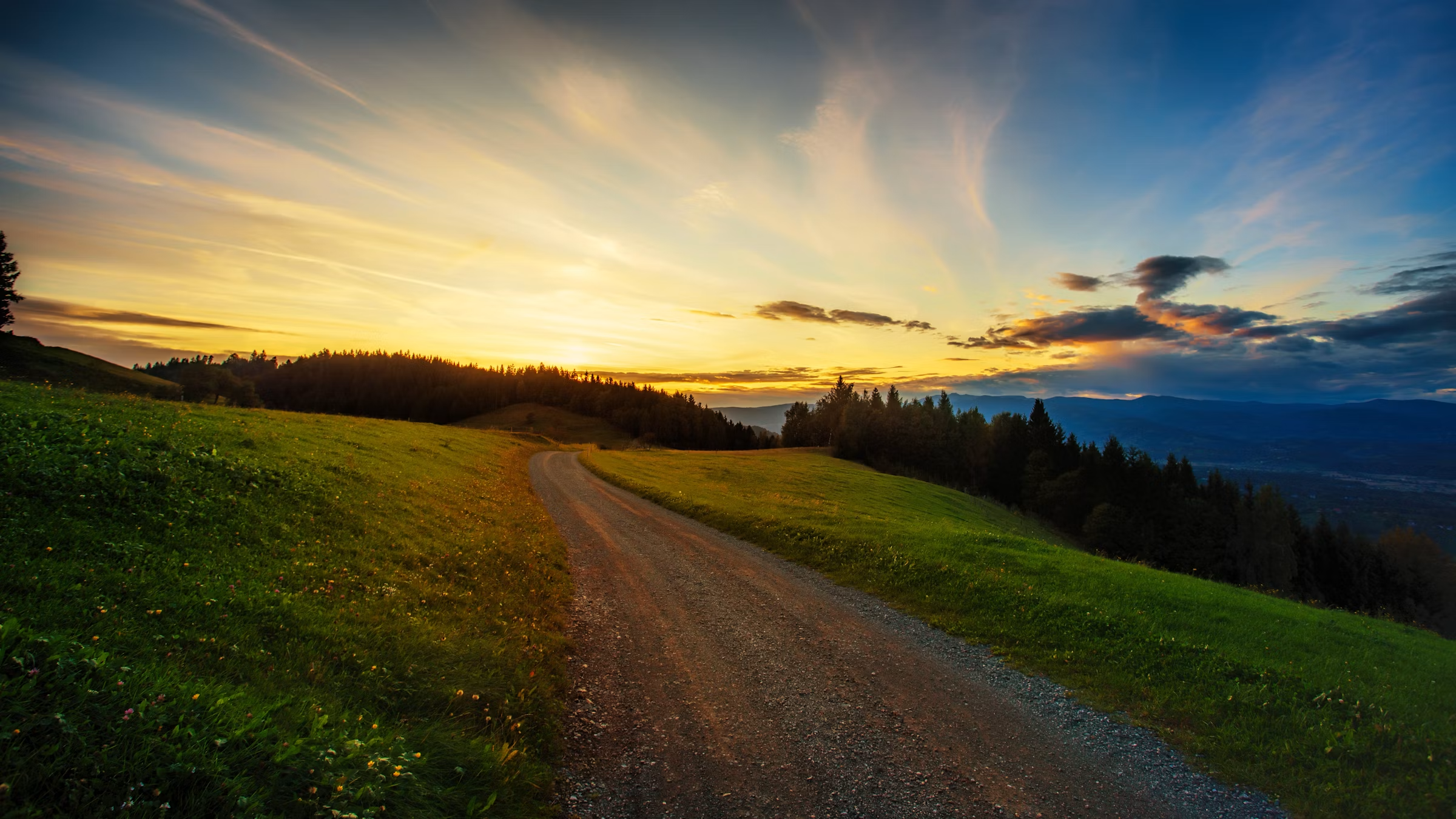
When I read stories like this, I step into them. I picture myself as the fourth person on that road. I can hear the gravel. I can see how heavy their faces are. Doing that helps me enter the story instead of just reading about it.
Jesus asks them what they are talking about, and they stop right there in their tracks. Are you the only visitor to Jerusalem who does not know what just happened? And Jesus, with what I can only call a holy sense of humor, says, “What things?”
So they tell Him. They tell Jesus all about Jesus. And then He starts teaching. Beginning with Moses and all the prophets, He walks them through the Scriptures, standing on a dirt road, and shows them Himself on every page. Patient. Kind. Direct. He is teaching them how to look, so they can finally see their own story.
Here is what gets me. These two had followed Him. They knew His voice. And still they did not recognize the One walking right beside them. Their eyes were open the whole walk. They just could not see.
Their Eyes Were Opened
By the time they reach the village, evening is coming. Jesus acts as if He is going on, but they will not let Him. Stay with us, they say. The day is almost over. So He goes in.
“When he was at table with them, he took the bread and blessed, and broke it, and gave it to them. And their eyes were opened and they recognized him” (Luke 24:30 and 31).
Notice when it happens. Their eyes were not opened while He talked. They were not opened while they walked beside Him. They were not opened when they sat down at the table. Their eyes were opened the moment He took the bread, blessed it, broke it, and gave it to them.
Took. Blessed. Broke. Gave. That is the Mass. That is the Eucharist.
As a former Protestant pastor, I did not see this connection for a long time. Scott Hahn helped me see it in his book The Lamb’s Supper, and I want to personally thank him for it. If you read one book this year, I would love for it to be that one.
There is power in breaking bread. And I do not just mean fellowship around a meal. I mean the power of the broken Body of Christ that we get to receive in the Eucharist. Power to help us get set free. Power to heal, to restore relationships, to give wisdom and understanding. If you are raising teenagers, you already know you need supernatural strength. The Eucharist is that powerful.
Then the two of them look at each other and say, “Did not our hearts burn within us while he talked to us on the road, while he opened to us the scriptures?” The Word warmed their hearts on the road. The breaking of the bread opened their eyes at the table. The road leads to the table.
Learning to Receive
Jesus took, blessed, broke, and gave. But somebody had to receive. And for a lot of us, that is the hardest part.
Have you ever gone to confession, been absolved, and walked out wondering if it really worked? Maybe I did not say it right. Maybe I should have cried. Maybe I am still carrying it. Sometimes it is hard to receive forgiveness. Sometimes it is hard to receive reconciliation with someone when the relationship has been strained.
I remember one of my early confessions. The sins I confessed were dark. The priest absolved me, and I got up to leave. Then I stopped, turned around, and said, “Father, can I ask you a question? Have I really been forgiven?”
He looked at me, not just in the eyes, but almost into my heart, and said, “Yes. You have been forgiven. You have been absolved.” I was looking at the priest, but it was as if I could see Christ on the cross. Not a figure from history. Someone who stepped into my sin and my darkness and touched my life.
That is the key. We have to learn to receive. To receive faith. To receive hope. To receive all of Christ. And ultimately to receive His Body and Blood in a way that breaks the yoke that has been holding us back from our purpose.
Why Opened Eyes Matter for Freedom
Their physical eyes were open the whole time. What opened at the table was their understanding. And that is what getting free requires.
Take a spirit of rejection. One approach asks, what spirit is it, and tries to command it to leave. The approach I take, which I call Discipleship Deliverance, asks a deeper question. Where was the open door? Did it come through generational patterns, personal sins, a soul tie? Where did that spirit find access to your story?
Answering that takes more than information. It takes opened eyes. Every sacrament gives us grace for the fight, and at the table, the Lord opens our eyes so we can see our own story from a Kingdom perspective and see what is holding us back.
So can I give you an invitation? The next time you go to Mass, arrive a few minutes early. Name one thing you are carrying. As the bread is taken, blessed, broken, and given, offer it to Him. And as you receive, pray four simple words. Lord, open my eyes.
Every episode comes with a free companion guide. This one has questions for the road, a simple practice for your next Mass, and a prayer for opened eyes. Find it, and every free guide, at thedirtroadwithjansen.com.
This teaching is part of the Roads series on The Dirt Road with Jansen, episodes anchored in the biblical roads where Jesus meets people mid-journey.
Scripture quotations are from the Catholic Edition of the Revised Standard Version of the Bible (RSV-CE), copyright © 1965, 1966 National Council of the Churches of Christ in the United States of America. Used by permission. All rights reserved worldwide.
TheDirtRoadwithJansen.com
Leave a Reply